Grid 2 Columns - Page 20 of 27 - Kantha Digital

Want to Rank on Google? Here’s What Your Website Actually Needs

Table of Contents

  1. Introduction
  2. User Intent and Search Behaviour
  3. Website Speed and SEO
  4. Content Quality and Keywords
  5. On-Page SEO
  6. Mobile-Friendly Design
  7. Link Building
  8. Technical SEO
  9. Tracking Performance
  10. Conclusion
  11. FAQs

1. Introduction to Google Ranking

All business owners want to rank number one in Google. But the reality is that ranking isn’t as simple as inserting keywords or writing any random blog post. Google doesn’t just rank websites based on over 200 different factors. To really succeed, you need a combination of technical SEO, content plan, and user experience.

If you are asking yourself what your website actually requires to be noticed by Google, this blog will take you step by step through the fundamental requirements.

2. Understanding User Intent and Search Behaviour

What is Search Intent?

The goal of a user’s search query is known as search intent. Websites that meet the needs of the searcher are rewarded by Google.

Informational intent: Users want to learn (e.g., “What is SEO?”).

Navigational intent: Users look for a specific site (e.g., “Kantha Digital website”).

Transactional intent: Users are ready to buy (e.g., “Buy gold trading course online”).

You increase the likelihood that your content will show up in the top results when you optimize it for intent.

3. Why Website Speed Matters for SEO

Google’s Core Web Vitals

Page loading time is now a direct ranking factor. A slow website can increase bounce rates, which signals poor user experience.

Some key speed metrics:

  • Largest Contentful Paint (LCP): Should be under 2.5 seconds.
  • First Input Delay (FID): Should be under 100 milliseconds.
  • Cumulative Layout Shift (CLS): Should be below 0.1.

Faster websites not only rank better but also convert more visitors into leads and sales.

4. Content Quality and Keyword Optimization

Why Content is Still King

Best Practices for Content:

  • Use keywords naturally without stuffing.
  • Add subtopics, FAQs, and bullet points for easy reading.
  • Update old content regularly.

If you are targeting trading, finance, or digital marketing, make sure your blogs include practical insights and clear takeaways.

5. The Role of On Page SEO in Ranking

On Page SEO is the foundation of every high-ranking website. Without it, your efforts will be incomplete.

Some key elements include:

  • Optimized title tags and meta descriptions.
  • Proper use of H1, H2, and H3 headings.
  • Internal linking to relevant resources.

6. Mobile Friendly Design and User Experience

Why Mobile Optimization is Crucial

Over 65% of searches happen on mobile. If your website is not mobile friendly, you lose both visitors and rankings.

Key Tips for Mobile SEO:

  • Use responsive design that adapts to all screens.
  • Avoid pop-ups that block content.
  • Ensure clickable buttons are large enough.

User experience (UX) also includes clear navigation, attractive visuals, and engaging calls to action.

7. Link Building and Authority Growth

Google sees backlinks as a vote of confidence. The more high-quality links pointing to your site, the more trustworthy your site becomes.

Link Building Strategies:

  • Guest posting on relevant trading or marketing sites.
  • Creating shareable infographics and guides.
  • Building connections on LinkedIn, Twitter, and trading communities.

Remember, quality matters more than quantity.

8. Technical SEO and Site Structure

Technical SEO helps Google crawl and index your site efficiently.

Key Technical Elements:
  • Submit an XML sitemap.
  • Fix broken links and redirect errors.
  • Use SSL certificates for HTTPS security.
  • Implement structured data (schema) to enhance search snippets.

A well-structured site makes it easier for search engines to rank your content.

9. Tracking Performance and Making Adjustments

The Importance of Monitoring

SEO is a continuous process. You must constantly assess and adjust.

Tools for Use:

Google Analytics for monitoring traffic.

Google Search Console for problems with indexing.

For keyword and backlink analysis, use Ahrefs or SEMrush.

You can determine what works and modify your approach by keeping an eye on the results.

10. Conclusion

Google ranking involves more than just keywords. It blends top-notch content, ongoing optimization, mobile-friendly design, and technical SEO.

If you employ these strategies on a regular basis, your website will rank higher and generate more leads, sales, and brand authority.

11. FAQ

1. How long does it take for a website to rank on Google?

A number of variables, including competition, website age, and SEO efforts, affect how long it takes to rank on Google. New websites usually don’t see noticeable results for three to six months.

2. Which SEO ranking factor is the most crucial?

One of the most crucial elements influencing SEO ranking is the caliber of the content. Google favors well-structured, pertinent, and valuable content.

3. Is it possible to rank on Google without backlinks?

Even though backlinks are crucial to SEO, you can still rank well on Google without them, particularly for keywords with little competition. Building high-quality backlinks, however, will expedite the ranking process.

4. How can I determine whether my website is responsive to mobile devices?

You can use Google’s Mobile-Friendly Test Tool to see if your website is responsive. It examines how well your website works on mobile devices.

5. How can I increase the speed of my website for better search engine optimization?

Focus on lowering image sizes, minifying CSS and JavaScript files, and utilizing caching mechanisms to increase website speed. Google PageSpeed Insights and other similar tools can offer helpful suggestions.

Read More

How We Helped a Local Business Get 230% More Organic Traffic in 60 Days

Table of Contents

  1. The Challenges This Local Business Faced Before SEO
  2. How We Performed an In-Depth SEO Audit
  3. The Keyword Strategy That Drove Targeted Organic Traffic
  4. On-Page SEO Improvements That Boosted Visibility
  5. Local SEO Tactics That Attracted Nearby Customers
  6. How Link Building Strengthened Domain Authority
  7. The Measurable Results We Achieved in 60 Days
  8. FAQs
  9. Final Thoughts

1. The Challenges This Local Business Faced Before SEO

Before partnering with Kantha Digital, this local business found itself struggling to gain traction online. The website was ranking on page two or three for the biggest relevant search terms, and its local search visibility was practically nonexistent. Their growth potential was constrained by a reasonable reliance on word of mouth.

Some key issues included:

  • Low organic traffic with minimal conversions
  • Poor local map pack presence
  • Unoptimized service pages with outdated content
  • Missing structured data and local schema
  • Slow site speed is affecting user experience

The owners knew they had a great product and strong local reputation, but needed a way to bring more potential customers from search engines directly to their website.

2. How We Performed an In-Depth SEO Audit

Firstly, we did a full SEO audit to discover every technical, content, and authority issue they were facing. We checked:

  • Technical – We checked for site speed, mobile responsiveness, URL structure, and indexation.
  • On Page – We checked meta titles, descriptions, headings, keywords, and content.
  • Local SEO – assessed their Google Business Profile with local citations and NAP.
  • Competitor benchmarking – We checked their top 3 local competitors to see where they stood to find content gaps and backlink gaps.
  • User experience testing – we checked navigation, page load times, and usability to make sure visitors would want to stay.

This audit was an important step to allow us to demonstrate high-priority changes that would affect quick wins and allow us to integrate long-term growth strategies.

3. The Keyword Strategy That Drove Targeted Organic Traffic

We built a targeted keyword strategy focused on high-intent, location-based search terms. Instead of chasing broad keywords with low conversion potential, we targeted:

  • Local service + city combinations (e.g., “emergency plumber in [city]”)
  • Long-tail queries that addressed specific customer needs
  • Near me searches and conversational phrases
  • Keywords with commercial and transactional intent

We grouped these into topic clusters to strengthen topical authority. For example, the “emergency services” cluster included service pages, blog posts answering common questions, and FAQ sections optimized for search intent.

4. On-Page SEO Improvements That Boosted Visibility

Once we had our keyword strategy, we revamped the site’s on-page SEO:

  • Optimized Meta Titles and Descriptions – Added compelling, keyword-rich titles to increase click-through rates.
  • Improved Heading Structures – Used H1, H2, and H3 tags strategically to guide both users and search engines.
  • Updated Service Pages – Added detailed descriptions, FAQs, and internal links to relevant resources.
  • Added Schema Markup – Implemented local business schema to improve search appearance.
  • Image Optimization – Reduced file sizes, added alt text, and improved load times.

We also created internal linking pathways between service pages, blog posts, and the contact page to help search engines understand site hierarchy and to keep visitors exploring the site.

5. Local SEO Strategies That Attracted Local Clients

Since this business was local, we put a lot of focus on local SEO: 

  • Google Business Profile Optimization – We added detailed service descriptions, quality photos, and updated at least once a week. 
  • NAP Consistency – We ensured the name, address, and phone number were the same in every directory. 
  • Customer Review Strategy – We helped them ask for and respond to reviews, which increased trust and ranking signals. 
  • Local Content Creation – They published blogs on events in the community, local tips, and services specific to the city. 
  • Map Pack Optimization – We included location keywords and service categories to be found in local search.

Our Local SEO Services give more details on how these strategies work for different industries.

6. How Link Building Strengthened Domain Authority

To improve search rankings, we implemented a white-hat link-building campaign:

  • Local Directory Listings – Submitted the business to relevant, reputable local directories.
  • Partnership Links – Collaborated with other local businesses for cross-promotion and backlinks.
  • Content Outreach – Created shareable blog content and pitched it to niche blogs and community news sites.
  • Resource Page Inclusion – Got the business listed on local resource pages and industry directories.

These quality backlinks signaled to search engines that the site was credible and worth ranking higher.

7. The Measurable Results We Achieved in 60 Days

After implementing our strategy, the results were clear and measurable:

  • 230% Increase in Organic Traffic – From both local and organic search.
  • Ranking Improvements – Over 20 keywords moved to the first page, with 8 reaching the top three positions.
  • Higher Local Map Pack Visibility – Business appeared for multiple service-plus-city searches.
  • More Inquiries and Calls – Contact form submissions and phone calls increased significantly.
  • Improved Engagement Metrics – Lower bounce rate and higher average session duration.

The combination of technical fixes, content improvements, and local SEO made a dramatic difference in a short time.

8. FAQs

1. How soon after optimizing my local business website will I see SEO results?

Many local businesses will notice a difference in 60-90 days, but generally, the results will increase over time.

2. Is local SEO different than normal SEO?

Yes! Local SEO targets nearby customers and focuses on showing up in local map packs and searches with a local focus.

3. Do small businesses need to bother with link building?

Absolutely. Quality relevant backlinks help with authority and credibility, both major ranking signals.

4. Will SEO work if I don’t run paid advertising?

Yes. SEO can build traffic without ad spend, though having it combined can be an effective marketing strategy.

5. How significant a role does content play in local SEO? 

Very significant. Valuable local content helps to attract and convert local customers.

9. Final Thoughts 

Increasing organic traffic by 230% in just 60 days is possible when you have the right strategy, tools, and team. At Kantha Digital, we combine in-depth SEO audits, targeted keyword research, on-page optimization, local SEO expertise, and strategic link building to deliver measurable growth for our clients.

If your local business is ready to climb search rankings, attract more nearby customers, and grow consistently, our team can make it happen. Let’s turn your website into a lead-generating machine.

If you want to learn more about Local SEO, check out our guide on How to Get Your Business on Google’s Local Pack.


Read More

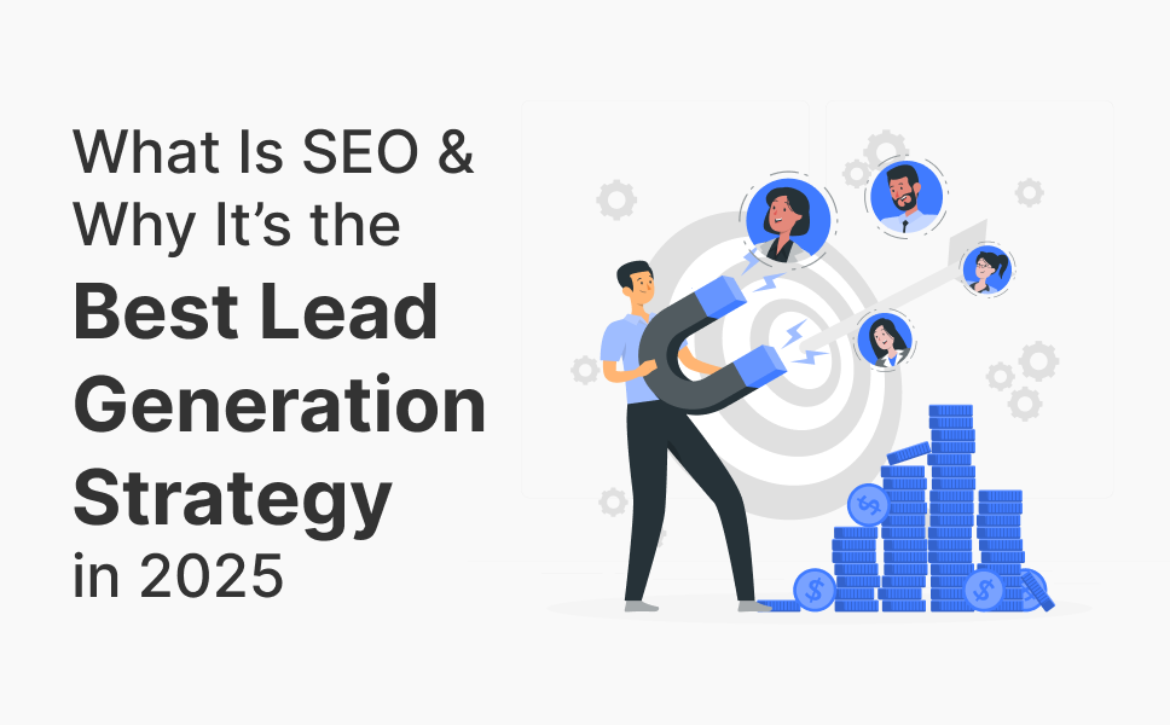
SEO & Why It’s the Best Lead Generation Strategy in 2025

Table of Contents

  1. What Is SEO in 2025
  2. How SEO Generates Qualified Leads
  3. Why SEO Is More Cost-Effective Than Paid Ads
  4. Key SEO Trends Shaping Lead Generation in 2025
  5. How High Quality Content Attracts and Converts Leads
  6. The Role of Keywords and Search Intent in Lead Generation
  7. Why Local SEO Is Critical for Service-Based Businesses
  8. How Tracking and Analytics Improve SEO Lead Generation
  9. FAQs
  10. Conclusion


1. What Is SEO in 2025

In 2025, SEO, or Search Engine Optimization, is about making your website discoverable not only on search engines but also on AI tools, voice search, and chatbots. It combines traditional practices such as keyword targeting, link building, and mobile optimization with new strategies like Answer Engine Optimization and AI-driven enhancements. The goal is simple: appear exactly where your audience is looking for solutions.

For a deeper look at our approach, check our SEO Services page.

2. How SEO Generates Qualified Leads

SEO attracts people who are already searching for solutions. This makes them more likely to engage, inquire, and purchase. By targeting high-intent keywords, optimizing your Google Business Profile, and creating localized content, SEO connects you with an audience ready to take action.

You can read our blog on Top 7 SEO Mistakes That Are Costing You Leads & Sales for more insights.

3. Why SEO Is More Cost-Effective Than Paid Ads

Think of SEO as owning online real estate. You invest time and resources to build it, and it keeps bringing visitors without paying for every click. Paid ads work quickly but stop the moment your budget does. SEO continues to deliver traffic and leads over months and years, making it a better long-term investment.

Our Google Ads vs. Organic SEO: Which Should You Invest In? guide explains how to balance SEO and paid strategies.

4. Key SEO Trends Shaping Lead Generation in 2025

Here are the most important trends making an impact this year:

  • AI-assisted content optimization with a human touch
  • Experience, Expertise, Authoritativeness, and Trustworthiness (E-E-A-T) signals
  • Core Web Vitals 2.0 for speed and usability
  • Optimizing for featured snippets and zero-click searches
  • Local SEO with review and map pack focus
  • Voice and conversational search readiness
  • Cross-channel integration with blogs, social, and video
  • Answer engine optimization for AI results

5. How High Quality Content Attracts and Converts Leads

Content that educates, solves troubles, and engages readers builds trust. This may be through blogs, videos, courses, interactive gear, or case studies. The greater cost your content material affords, the more likely visitors are to share their data, subscribe, or make a purchase.

Check our Content Marketing Services to see how we create content that converts.

6. The Role of Keywords and Search Intent in Lead Generation

Keywords reflect what people want. When you align your content with the right search intent—informational, navigational, or transactional—you attract visitors at the perfect stage of their buying journey. Topic clusters and related keyword groups also help search engines understand your authority on a subject.

7. Why Local SEO Is Critical for Service-Based Businesses

Local SEO ensures your business appears when nearby customers search for your services. This involves optimizing your Google Business Profile, ensuring consistent name-address-phone details, and gathering positive reviews. For service-based companies, this can be the most important lead generation tool.

Our Local SEO Services cover everything needed to dominate local searches.

8. How Tracking and Analytics Improve SEO Lead Generation

Tracking tools like Google Analytics and Search Console give you data to refine your SEO efforts. You can identify which pages generate the most leads, where visitors drop off, and which keywords are worth focusing on. This ensures every change you make moves you closer to your goals.

9. FAQs

1. What makes SEO still relevant in 2025?

SEO now covers search engines, voice assistants, and AI platforms, making it more versatile and powerful than ever.

2. Can SEO and paid ads work together?

Yes. SEO builds long-term authority, while ads bring immediate visibility. The combination offers a strong ROI.

3. How long does it take to see SEO results?

Expect measurable growth in 3 to 6 months, with compounding benefits over time.

4. Why is local SEO so important?

Local SEO connects you with customers nearby who are ready to act, increasing calls and visits.

5. Do I need content to make SEO work?

Yes. High-quality, relevant content is the foundation for attracting and converting leads.

10. Conclusion

SEO is still the most powerful lead generation strategy in 2025 because it grows with your business. It adapts to new search methods, builds trust with your audience, and continues delivering qualified leads long after the initial effort. When combined with content marketing and data tracking, SEO becomes a sustainable driver of growth. At Kantha Digital, we specialize in creating SEO strategies that are tailored to your business, optimized for the latest trends, and designed to attract high-intent leads that convert. If you want to dominate search results and generate consistent, qualified leads, our team is ready to help you make it happen.

Read More

Google Won’t Show Your Small Business Unless You Apply These SEO Tricks

If your small business is struggling to appear on Google’s first page, you’re not alone. With increased online competition and evolving algorithms, ranking high on search engines is more challenging than ever. At Kantha Digital, we understand these pain points and have helped countless local businesses rank higher with smart, sustainable SEO strategies. This blog breaks down the most effective SEO tricks for small businesses that can drastically improve your visibility on Google.

Table of Contents

    1. Why isn’t your small business showing up on Google?
    2. What local SEO tricks help small businesses rank higher?
    3. How can you optimize your Google Business Profile for better visibility?
    4. What role do keywords play in ranking a small business?
    5. How do online reviews impact small business SEO?
    6. Why is mobile-friendly design critical for local SEO success?
    7. How can backlinks boost your small business’s rankings?
    8. What tools help track small business SEO performance?
    9. FAQs
    10. Conclusion

    1. Why isn’t your small business showing up on Google?

    If your small enterprise doesn’t appear on Google, it could be due to incomplete online profiles, lack of SEO optimization, low domain authority, or irrelevant content. Google’s algorithm rewards agencies that offer clean, consistent, and straightforward statistics. Without these basics, it’s difficult to gain visibility, especially in aggressive niches.

    2. What local SEO tricks help small businesses rank higher?

    Local SEO for small organizations is a specialty of optimizing for nearby clients. Here are a few effective hints:

    • Claim and confirm your Google Business Profile
    • Add accurate local citations (NAP: Name, Address, Phone)
    • Create neighborhood touchdown pages for each provider area
    • Get indexed in applicable business directories
    • Use region-primarily based key phrases

    3. How can you optimize your Google Business Profile for better visibility?

    Your Google Business Profile optimization is crucial for ranking in Google’s local pack. Make sure to:

    • Complete every section of your profile
    • Use high-quality images and update them regularly
    • Add your business categories
    • Post updates, offers, and events
    • Encourage and respond to reviews

    4. What role do keywords play in ranking a small business?

    Keywords are still the backbone of SEO. Use long-tail and location-based keywords in:

    • Page titles
    • Meta descriptions
    • Headers
    • Image alt text
    • Content body Tools like Ubersuggest and Google Keyword Planner can help identify relevant terms your audience is searching for.

    5. How do online reviews impact small business SEO?

    Positive online reviews not handiest build trust but also affect your rating. Google uses reviews as a ranking signal in local search engine marketing. Ask happy clients to share away opinions on Google, Yelp, and other platforms. More highly rated evaluations = higher visibility.

    6. Why is mobile-friendly design critical for local SEO success?

    Over 60% of searches happen on mobile. If your site isn’t mobile-optimized, Google will likely rank you lower. A responsive design ensures:

    • Fast loading times
    • Clear navigation
    • Easy-to-read text
    • Clickable contact info (like phone numbers)

    7. How can backlinks boost your small business rankings?

    High-quality backlinks tell Google your site is trustworthy. For small businesses, focus on:

    • Local partnerships (get listed on local chamber sites)
    • Guest blogging
    • Press releases and local news features
    • Supplier or client backlinks

    8. What tools help track small business SEO performance?

    Tracking your performance is key to refining your strategy. Some great tools include:

    • Google Analytics
    • Google Search Console
    • Moz Local
    • BrightLocal
    • SEMrush

    They help monitor traffic sources, ranking changes, and keyword effectiveness.

    FAQs

    1. How long does it take for a small commercial enterprise to rank on Google?

    Typically 3-6 months, relying on opposition, industry, and contemporary SEO repute.

    2. Is local search engine marketing worth the funding?

    Absolutely. Local SEO can power centered traffic and higher conversion rates.

    3. What is the distinction between nearby search engine marketing and traditional search engine optimization?

    Local search engine marketing targets region-primarily based searches, even as traditional search engine optimization is broader and no longer tied to geography.

    4. Can I do small commercial enterprise SEO myself?

    Yes, however, operating with specialists guarantees quicker and more sustainable outcomes.

    5. How many reviews do I need to rank higher?

    There’s no magic variety, but consistency and excellent count number are more important than amount.

    Conclusion


    SEO isn’t just for big brands. With the right strategies, small businesses can dominate Google search results in their area. Focus on local SEO tactics, optimize your Google Business Profile, build trust with reviews, and keep your website mobile-friendly. These practical SEO tricks, when applied consistently, will help you reach more customers and grow faster.
    Want expert help? Explore our On-page SEO Services, Link Building Services, or check out our blog on optimizing product pages for SEO. Let Kantha Digital guide your small business to Google’s first page!


    Read More

    Top 7 SEO Mistakes That Are Costing You Leads and Sales

    In today’s competitive online market, SEO (Search Engine Optimization) isn’t just an increase device—it’s a need. Businesses that fail to optimize their websites regularly see competitors dominate seek outcomes, main to misplaced leads, site visitors, and revenue. At Kantha Digital, we’ve analyzed masses of websites and diagnosed the maximum common SEO errors that prevent organizations from success. Fixing these mistakes can notably improve scores, increase organic site visitors, and convert site visitors into paying clients.

    Table of Contents

    1. Ignoring Keyword Research and Search Intent
    2. Overlooking On-Page SEO Elements (Titles, Meta Tags, and Headers)
    3. Poor Website Speed and Mobile Optimization
    4. Failing to Focus on Quality Content Creation and Updates
    5. Weak or Spammy Backlink Strategy: A Common SEO Mistake to Avoid
    6. Underestimating Local SEO for Targeted Traffic
    7. Failing to Track SEO Performance with Analytics Tools
    8. Bonus: Relying Solely on Paid Ads Instead of Organic Growth
    9. FAQs
    10. Conclusion

    1. Ignoring Keyword Research and Search Intent

    Keyword research is the foundation of SEO. Without understanding what your audience is searching for, you risk creating content that doesn’t rank or convert. Many businesses make the mistake of targeting high-volume keywords without analyzing search intent.

    👉 For example, ranking for “buy running shoes online” is far more profitable than “running shoes” because the intent signals purchase readiness.

    Use tools like Google Keyword Planner, SEMrush, or Ahrefs to find keywords that balance search volume and buyer intent.

    Need better rankings? Check out our On-page SEO Service Agency to optimize your site for search engines.

    2. Overlooking On-Page SEO Elements (Titles, Meta Tags, and Headers)

    Search engines rely on on-page SEO to understand your content. Poorly optimized titles, meta tags, and headers can lead to missed ranking opportunities.

    • Title tags should include primary keywords naturally.
    • Meta descriptions must be enticing while highlighting benefits.
    • Headers (H1, H2, H3) should structure your content clearly for both readers and crawlers.

    Explore our On-page SEO Checklist for 2025 to ensure your site is fully optimized.

    3. Poor Website Speed and Mobile Optimization

    Did you realize that 53% of users abandon websites that take more than three seconds to load? Google’s Core Web Vitals now prioritize pace and cell-first layout.

    A sluggish, poorly optimized cellular experience without delay impacts scores and conversions.

    Quick Fixes:

    • Compress snapshots with tools like TinyPNG
    • Use browser caching and CDN services
    • Optimize code and scripts
    • Implement responsive design for seamless cell surfing

    4. Failing to Focus on Quality Content Creation and Updates

    Publishing thin, outdated, or irrelevant content is a surefire way to lose rankings. Google’s Helpful Content Update rewards content that is fresh, relevant, and written for users—not search engines.

    ✅ Audit existing blogs and product pages regularly.

    ✅ Update old stats, improve formatting, and add visuals.

    ✅ Use internal linking to connect related blogs like How to Optimize Product Pages for SEO.

    5. Weak or Spammy Backlink Strategy: A Common SEO Mistake to Avoid

    Backlinks remain one of the strongest ranking signals. However, low-quality or spammy backlinks can harm your SEO rather than help it.

    Instead, focus on:

    • Guest blogging on niche-relevant sites
    • Earning mentions in authoritative publications
    • Creating share-worthy content to attract organic links

    Work with a trusted Link-Building Service Agency to build high-quality backlinks safely.

    6. Underestimating Local SEO for Targeted Traffic

    If you run a local business, ignoring Local SEO means losing out on customers ready to buy. Optimizing for Google Business Profile, local citations, and location-based keywords is essential for local visibility.

    For example, ranking for “best bakery in Surat” drives nearby customers directly to your door—where they’re more likely to convert.

    7. Failing to Track SEO Performance with Analytics Tools

    SEO is a data-driven process. If you aren’t tracking organic traffic, keyword rankings, bounce rates, or conversions, you’re essentially guessing.

    Use tools like Google Analytics 4 (GA4) and Google Search Console to monitor performance and identify what’s working (and what isn’t).

    8. Bonus: Relying Solely on Paid Ads Instead of Organic Growth

    While paid ads provide quick results, they stop generating leads once the budget runs out. On the other hand, organic SEO builds long-term visibility and credibility.

    Integrating SEO with paid campaigns can yield the best results, but relying only on ads is a costly mistake.

    FAQs About SEO Mistakes

    Q1. How do I know if my website has SEO mistakes?

    Use tools like SEMrush Site Audit or Google Search Console to identify errors like broken links, missing tags, or slow loading speeds.

    Q2. What’s the fastest SEO fix to improve rankings?

    Optimizing on-page elements (titles, meta tags, and headers) and improving speed often deliver quick results.

    Q3. How often should I update my content?

    At least every 3-6 months. Updating content signals freshness to Google.

    Q4. Are backlinks still important in 2025?

    Yes, but only if they’re quality backlinks from trusted, relevant sites.

    Q5. Can I manage SEO on my own?

    Basic optimizations are doable, but advanced SEO strategies often need expert help.

    Conclusion: Fix SEO Mistakes to Regain Lost Leads and Sales

    Avoiding these SEO mistakes can transform your website from an underperforming asset into a lead-generating machine. By focusing on keyword research, on-page optimization, content updates, backlink quality, and performance tracking, you can steadily climb Google’s rankings.

    At Kantha Digital, we specialize in helping businesses eliminate these SEO errors, implement proven strategies, and boost conversions. Start fixing these mistakes today—and watch your organic traffic and sales grow exponentially!

    Read More

    How to Rank Your Business on Google in 90 Days — Our Proven SEO System

    Ranking your business on Google doesn’t have to take years. With the right approach, proven strategies, and consistent execution, you can start seeing significant improvements in just 90 days. At Kantha Digital, we’ve developed a 90-day SEO system designed to deliver fast, sustainable results for businesses like yours.

    In this guide, we’ll break down our step-by-step system, from keyword research to authority building, and explain precisely how we assist corporations climb Google’s ratings within three months.

    Table of Contents

    1. What makes our 90-day SEO system effective for fast ranking?
    2. How do we conduct in-depth keyword research to target the right audience?
    3. What role does technical SEO play in improving rankings quickly?
    4. How can optimized on-page SEO boost your search visibility?
    5. How do backlinks and authority building accelerate SEO results?
    6. How does user experience (UX) impact faster SEO growth?
    7. How do we refine strategies to rank your business based on real-time data?
    8. What results can you realistically expect in the first 90 days?
    9. FAQs to Rank Your Business on Google
    10.  Final Thoughts

    1. What makes our 90-day SEO system effective for fast ranking?

    Our 90-day SEO framework focuses on implementing high-impact strategies from day one. Unlike generic SEO plans, our system prioritizes actions that drive early wins while building long-term growth.

    Key elements include:

    • Targeting quick-win keywords (low competition, high intent) to capture early traffic.
    • Technical audits to fix ranking barriers immediately.
    • Content refresh and optimization for existing pages to boost relevance.
    • Aggressive backlink building to increase authority.

    👉 Related: Check out our On-Page SEO Service for a detailed look at our SEO optimization process.

    2. How do we conduct in-depth keyword research to target the right audience?

    The foundation of our 90-day SEO plan lies in smart keyword research. We focus on:

    • Long-tail keywords with clear search intent (ideal for conversions).
    • Competitor keyword gap analysis to identify ranking opportunities.
    • Local SEO keywords to target customers in specific regions.
    • Search volume vs. competition analysis for better ROI.

    We use tools like Google Keyword Planner, SEMrush, and Ahrefs to make sure we select key phrases that not most effective entice visitors but also convert.

    👉 Read our blog: Want More Clicks? Find Your Best Keywords with Google Search Console.

    3. What role does technical SEO play in improving rankings quickly?

    Technical SEO is crucial to making your site Google-friendly. Our team conducts a comprehensive audit and implements fixes like:

    • Improving site speed (Core Web Vitals).
    • Enabling mobile responsiveness for better mobile search rankings.
    • Optimizing crawlability and indexation via robots.txt and sitemap submissions.
    • Fixing broken links and 404 errors to improve user experience.

    This ensures your website is technically sound so Google bots can index it efficiently.

    4. How can optimized on-page SEO boost your search visibility?

    On-page search engine optimization is one of the quickest methods to improve ratings. We exceptional-music:

    • Meta titles and outlines with goal keywords.
    • Header tags (H1, H2, H3) for a clean content structure.
    • Internal linking techniques to keep customers engaged.
    • Adding LSI keywords to beautify relevance and semantic seek insurance.

    By optimizing these elements, we assist Google in recognizing your content’s relevance, boosting your chances of ranking higher.

    5. How do backlinks and authority building accelerate SEO results?

    Backlinks remain a top-ranking factor in Google’s algorithm. Our approach involves:

    • Building high-quality backlinks from reputable sites in your niche.
    • Guest posting on authority websites to boost domain strength.
    • Using business listings and citations for local SEO visibility.
    • Outreach for contextual link placements within relevant content.

    The result? A stronger domain authority that pushes your pages up the rankings.

    👉 Related: Explore our Link Building Service Agency for powerful off-page strategies.

    6. How does user experience (UX) impact faster SEO growth?

    Google’s algorithm now prioritizes person indicators like engagement and satisfaction. To enhance UX, we:

    • Enhance page load velocity and decrease leap charges.
    • Design clear navigation for better usability.
    • Use interactive content (movies, infographics) to keep customers engaged.
    • Implement cell-first layout for seamless browsing.

    A notable user enjoys indicators to Google that your website online merits better scores.

    7. How do we refine strategies to rank your business based on real-time data?

    SEO is not a set-and-forget process. Throughout our 90-day plan, we monitor performance using tools like Google Search Console and Google Analytics.

    We track:

    • Keyword movements (ranking gains/losses).
    • CTR and bounce rates for optimization insights.
    • Backlink growth and domain authority.
    • Conversion metrics tied to organic traffic.

    These insights help us pivot quickly to maximize results.

    8. What results can you realistically expect in the first 90 days?

    While SEO results vary based on industry and competition, our clients typically see:

    • Improved keyword rankings within 30-45 days.
    • 10-30% increase in organic traffic by Day 60.
    • Noticeable conversion rate boosts by Day 90.

    By combining quick-win strategies with long-term groundwork, our system lays the foundation for sustained growth.

    9. FAQs to Rank Your Business on Google

    Q1. How fast can SEO deliver results?

    Most websites see noticeable changes in 3 months, but competitive niches may take longer. Our approach speeds up early wins while building long-term success.

    Q2. Do I need backlinks to rank quickly?

    Yes! Quality backlinks signal trust and authority to Google, which accelerates rankings.

    Q3. Can I rank without technical SEO fixes?

    Unlikely. Technical issues often block search engines from properly crawling or indexing your site.

    Q4. What tools do you use for SEO tracking?

    We use Google Analytics, Search Console, SEMrush, and Ahrefs for tracking and insights.

    Q5. Is Kantha Digital’s SEO plan suitable for local businesses?

    Absolutely. Our plan integrates local SEO to help small businesses dominate local search results.

    10. Final Thoughts

    Ranking your business on Google in 90 days is achievable with a strategic and disciplined SEO approach. At Kantha Digital, our proven system blends keyword research, technical SEO, on-page optimization, backlinks, and data-driven refinement to deliver measurable results.

    If your competitors are outranking you, it’s time to take action. Start implementing our 90-day SEO system today and put your business ahead in search results.

    Read More